
October 8, 2026
SUBSTANTIAL: Hollywood Is Still Rebuilding — Production, Crew Employment and What Comes Next for Los Angeles
Film & Television Trade Signal: SUBSTANTIAL
Local Hiring Outlook: DEVELOPING
October 8, 2026 | Los Angeles, California
Hollywood is working, but Los Angeles has not returned to the production volume that once supported its extensive workforce. New film and television awards, studio commitments and state legislation offer measurable reasons to watch for movement. For working crew members, however, a project announcement is not the same as a start date, a stage booking or a paycheck.
The latest verified Los Angeles production numbers
FilmLA reported 4,711 permitted on-location shoot days in the second quarter of 2026, down 12.7% from the same quarter of 2025. The headline number shows that the region’s location-production economy remains under pressure. FilmLA’s data cover permitted filming in its jurisdictions, not every soundstage shoot or post-production assignment.
The details are mixed. Television logged 1,607 shoot days in Q2, a 34.4% improvement over Q1 but 27.7% lower than a year earlier. Television dramas improved sharply from the previous quarter, while reality programming continued to weigh on the year-over-year result. Feature films posted 443 shoot days, down 19.9% year over year. Commercials registered 543 shoot days, down 21.5%.
The picture is therefore not “Hollywood has stopped,” nor is it “Hollywood is back.” It is an uneven recovery with more work needed before many local craftspeople experience a sustained increase in days employed.
California incentives are creating a pipeline — not an instant hiring list
The California Film Commission reported that 170 projects received awards during the first year of the expanded Film & Television Tax Credit Program 4.0, representing an estimated $6.6 billion in direct California production spending and approximately 34,921 projected cast-and-crew jobs. These are project-based forecasts associated with awards, not independently verified filled positions.
Year two has also begun: in August the commission announced nine additional television projects, with a projected $608 million in California production spending. Announced titles included a Clueless sequel series, a reboot of The Rockford Files, and Ascent. Their awards create a meaningful production-development signal; the timing, locations, departments and hiring channels for individual jobs still require separate verification.
On September 21, California also enacted changes strengthening its film-and-television incentives and establishing a new tax-credit framework for post-production work, covering crafts such as picture editing, sound, music, visual effects and finishing. The opportunity extends beyond the set, but implementation and actual employment outcomes remain to be measured.
The studio system is changing while the workforce waits
The October 6 completion of the Paramount–Warner Bros. Discovery transaction under Skydance Corporation is a confirmed corporate development. Studio plans and pledged film output are consequential, but employment will depend on where productions physically operate, which departments ramp up, and which Los Angeles suppliers receive work.
The stakes are material. Before the transaction closed, an August Los Angeles County workforce-impact analysis modeled up to 4,500 direct local film-and-television jobs at risk under certain merger-related scenarios. That estimate is a forecast of exposure, not a count of actual layoffs. It illustrates why consolidation needs to be evaluated separately from new production commitments.
What recovery means on the ground
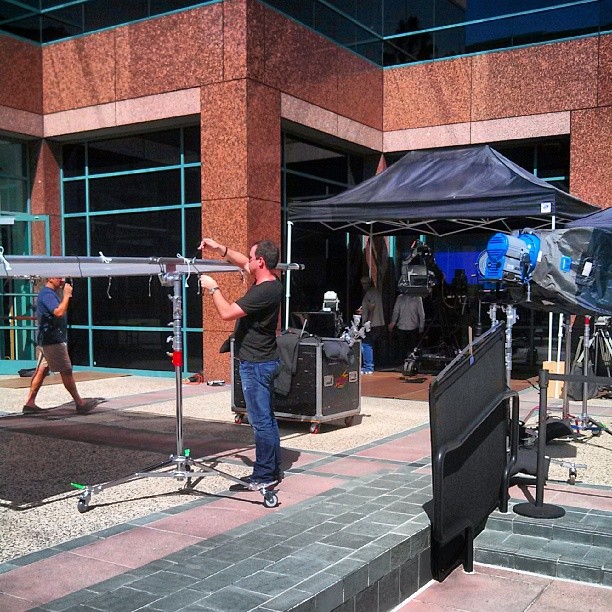
A working production activates an interdependent chain. Production offices open; locations are secured; art and construction crews begin preparation; rigging, grip and electric departments organize; camera and sound packages are reserved; transportation, catering and other service providers mobilize. All of that occurs before the audience sees a frame of the finished project.
For working grips, electricians, camera crews, drivers, set decorators, craftspeople, production assistants and post-production professionals, the decisive measures are actual calls, dates worked, reliable payment and repeat employment. The same is true for independent filmmakers and production-service businesses building viable schedules and budgets.
Socialbilitty Trade Desk assessment
Continued weakness in LA permitted location filming: CONFIRMED by FilmLA’s Q2 2026 data
State-backed production pipeline: SUBSTANTIAL, based on project awards and projected spending
New post-production incentive legislation: CONFIRMED
Skydance corporate consolidation: CONFIRMED
Broad-based recovery in local crew employment: DEVELOPING — not yet established by these announcements
Specific open crew positions from the developments in this report: NOT VERIFIED
What to watch next: newly occupied stages and locations; specific productions entering preparation; department-head appointments; construction and rigging activity; vendor purchase orders; verified calls for crew; completed California production expenditures; and subsequent FilmLA shoot-day reporting. Socialbilitty will distinguish the signal from the job.
How do I get work?
Do not interpret tax-credit awards, a corporate merger or generalized industry optimism as open job listings. For project-level reporting and verified workforce information, follow Socialbilitty Production and the Socialbilitty Hiring Signals coverage. Working professionals can also record crew availability.
Have first-hand, verifiable information about film, television or commercial production activity? Submit information or a correction. Coverage and signal classifications are editorial decisions, not paid placements.
Reporting sources
- FilmLA — Q2 2026 Los Angeles on-location activity (July 23, 2026)
- California Film Commission — Year-one tax-credit project awards and projected employment (July 7, 2026)
- California Film Commission — Nine television awards in year two (August 10, 2026)
- California Film Commission — Film and post-production tax-credit legislation (September 21, 2026)
- Los Angeles County Department of Economic Opportunity — Merger workforce-impact scenarios (August 19, 2026)
- Associated Press — Skydance completion and studio outlook (October 7, 2026)
Photography: Socialbilitty’s previously supplied behind-the-scenes archive. Archival images are illustrative and are not presented as documentation of the specific events or productions discussed in this report.
Socialbilitty Trade Desk
Film and television information focused on production activity, workforce developments and the signals that can lead to employment.
CONTINUE FROM HERE