
October 16, 2026
DEVELOPING: Trained for Hollywood — Where Do Below-the-Line Graduates Find Work in 2027?
FILM & TELEVISION TRADE SIGNAL · CREW & WORKFORCE · DEVELOPING | October 16, 2026 | Q1 2027 Outlook
Los Angeles has trained thousands of people for production careers. As Hollywood’s recovery remains uneven, the harder question is what happens after graduation: Who connects graduates to paid days on set, qualifying experience and sustainable work?
Hollywood CPR, Streetlights, IATSE Local 80’s High Road grip training, BRIC Foundation and a wider network of community organizations have built pathways into film and television jobs. But certificates, trainee pools, registered apprenticeships and union roster eligibility are different stages of a career. None should be confused with a confirmed job opening.
Production recovery: workforce demand is not yet keeping pace
FilmLA reported 4,711 permitted on-location shoot days in Q2 2026, down 12.7% from Q2 2025. The preceding quarter recorded 5,121 shoot days, after 4,625 in Q4 2025. Incentive-supported scripted work has helped, but local production has not recovered uniformly. FilmLA’s July 23 research update documents the shift.
Source: FilmLA Q1 2026 and Q2 2026 research updates. Shoot days count permitted on-location activity, not all stage work or individual crew jobs.
California’s Film & Television Tax Credit Program 4.0 awarded 170 projects in its first fiscal year, with $6.6 billion in projected direct production spending and 34,921 projected cast-and-crew jobs, according to the California Film Commission’s July 7 announcement. These are award-associated projections, not verified 2027 vacancies or a count of unique workers who have already been employed.
The primary training-to-employment pathways
Hollywood CPR: union-craft traineeships
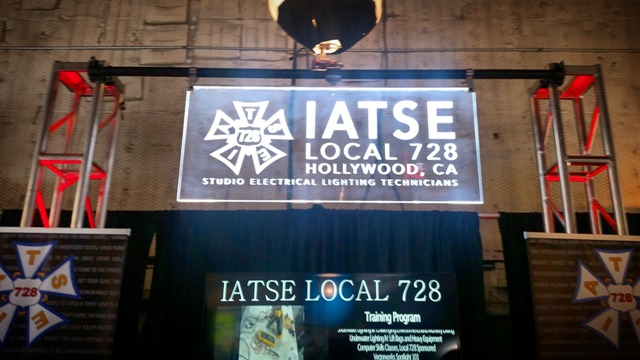
Hollywood Cinema Production Resources (Hollywood CPR) offers a craft-centered route into professional work, with pathways that include grip (Local 80), set lighting (Local 728), camera (Local 600), editing (Local 700), costumes (Local 705), props (Local 44), and other classifications subject to demand. Hollywood CPR reports specialized training followed by experience requirements before supervised production rotations.
A major current development is the connection to California’s Career Readiness rules. Hollywood CPR says qualifying productions that employ approved trainees may be eligible for an additional 2% tax-credit increase under applicable program rules. Department heads must first hire a fully staffed union crew; trainees cannot replace working crew or act as unsupervised substitutes. Employers and prospective trainees should confirm availability and eligibility directly with the organization.
After training: Qualifying craft experience → approved supervised traineeship → documented hours and competency → separate Industry Experience Roster and union processes where applicable. Hollywood CPR workforce and employer partnerships.
Streetlights: production-assistant training and job placement
Streetlights offers 240 hours of PA preparation, including 120 hours working on actual productions. Its job-placement support and established PA availability roster are especially meaningful in a freelance labor market where early contacts often determine repeat calls.
After training: PA placement → on-set or office experience → trusted production relationships → repeat freelance assignments and possible advancement toward coordination or specific craft tracks. Entry-level PA work is not itself authorization to perform covered union craft duties.
IATSE Local 80: High Road grip training and advanced skills
IATSE Local 80 is a workforce partner in BRIC’s California Arts, Media and Entertainment High Road effort and maintains its own hands-on skills training. Grips seeking work need safety readiness, practical equipment competencies and familiarity with the classifications, working rules and job-site expectations of their Local.
The High Road-related grip pathway and Hollywood CPR’s traineeships are not the same program. New applicants should verify whether a future training cohort admits nonmembers, while members should check the Local’s skills training and referral procedures. No new Q1 2027 Local 80 grip cohort or guaranteed opening has been independently verified for this briefing.
BRIC Foundation: multi-sector results and paid apprenticeship
BRIC Foundation’s Arts, Media and Entertainment High Road Training Partnership worked across unions, employers, community organizations and creative disciplines. Its three-year partnership reports measurable completed-program outcomes; those totals should not be portrayed as an active Local 80 hiring count. BRIC’s distinct California registered apprenticeship pathway continues to accept applications on a rolling basis for eligible candidates, with employer matching subject to actual openings.
Source: BRIC Foundation’s AME-HRTP report. Historical outcomes across multiple creative-industry disciplines; figures do not represent current vacancies, unique permanent jobs or Local 80 placements exclusively.
The BRIC apprenticeship model includes 1,080 paid on-the-job hours, 144 hours of related instruction and mentorship. Its posted career tracks emphasize animation, visual development, production management, technical art and visual effects—not general live-action grip hiring. The next listed review cutoff is November 11, 2026, with determinations on December 15, 2026. Joining the candidate pool is not a job offer.

More organizations connecting training and opportunity
- Handy Foundation: below-the-line training and registered apprenticeship pathways including post-production and virtual production specialties.
- ManifestWorks: production training and freelance placement support for candidates impacted by foster care, homelessness or incarceration. Its listed Winter 2027 application deadline is January 29, 2027.
- Group Effort Initiative: employer relationships, production internships, PA opportunities and mentoring; employers make final hiring decisions.
- Entertainment Industry Foundation / IATSE Career Pathways: early access to craft demonstrations, technical training and industry connections.
- California Film Commission Career Pathways: workforce development and production-accounting routes; consult current program offerings and eligibility.
- Film Independent Project Involve: mentorship and project collaboration for developing filmmakers, including cinematography and editing; not a substitute for union experience rules.
What a graduate can actually do next
The pathway varies by craft, union classification, program and employer; completion of one stage never automatically guarantees the next.
First, identify whether the intended role is an entry-level PA assignment, an employer-paid apprenticeship, or a union-covered craft classification. These are not interchangeable. Second, maintain a clean record of paid work: job title, dates, production name, employer or payroll company, contacts, certificates, references and updated availability.
For applicable union crafts, Contract Services explains that Industry Experience Roster (IER) placement requires qualifying work experience, employment verification and preliminary training; union membership is a separate process. Workers with commercial credits should also examine the Television Commercial Roster and the additional requirements for IER placement.
Graduates should continue contacting their program’s placement staff, current department heads, referral systems, productions and legitimate employers. Skills training improves readiness; relationships, verifiable credits and repeat paid employment establish careers.
Q1 2027 workforce outlook: where opportunity may develop
1. Incentive-backed films and television
California’s awarded slate gives the state a potential staffing pipeline as productions move into prep and principal photography. But an incentive award does not confirm the hiring date, the relevant department, or an open crew position. Socialbilitty will classify those future developments separately as observed, developing, substantial or confirmed signals.
2. Paid traineeships on fully staffed productions
Qualified productions can coordinate with Hollywood CPR and other training partners before schedules lock. This is a measurable route to paid, supervised experience that should preserve the established crew’s positions and labor protections.
3. Employer-matched apprenticeships and PA hiring
BRIC and workforce partners can connect eligible candidates with studios when positions arise; Streetlights and ManifestWorks provide alternative PA-oriented pathways. Applicants should prioritize confirmed placement terms, pay, duration, employer identity and responsibilities.
4. Post-production, commercial and specialized skills
California’s 2026 post-production incentive legislation creates a new area to monitor. Commercials, short-form productions and specialist vendors may provide additional experience, but the availability and roster qualification of any given assignment must be checked rather than assumed.
How Los Angeles converts training into sustained jobs
Socialbilitty Trade Desk’s editorial recommendation: measure the bridge between graduation and recurring paychecks. Workforce agencies, unions, training partners and employers should report the number of paid placements, days worked, repeat bookings, documented qualifying experience and 90-/180-day retention outcomes—while protecting privacy and using consistent definitions.
Producers should identify projected crew needs early and communicate with approved program partners. Training organizations should maintain current, permission-based graduate availability and distinguish program completion from employer-ready classifications. Neither producers nor training providers should use trainees to displace established covered crew.
Hollywood does not have a shortage of people willing to learn. Its more immediate challenge is turning professional training into enough sustainable, properly paid production employment.
Next-quarter dates to watch
- November 11, 2026: BRIC California apprenticeship application review cutoff.
- December 15, 2026: BRIC’s posted determination date for that review cycle.
- January 29, 2027: ManifestWorks’ posted Winter 2027 application deadline.
- January–March 2027: watch for confirmed incentive-backed productions entering staffing, supervised traineeships, announced cohorts and apprenticeship matches; no broad Q1 hiring volume has been verified.
For graduates: Join the Socialbilitty Network and continue monitoring Trade Desk workforce and production hiring signals. For producers and department heads: work directly with training programs on compliant, paid placements that supplement—not replace—the working crew.
Editorial note: Public information reviewed October 16, 2026. Program selection, start dates and work availability can change. Photographs are authentic historical Socialbilitty uploads and do not document a current cohort. Published placement totals and projected crew jobs must not be conflated with open positions. This is a workforce trade signal, not a job listing or hiring guarantee.
Principal sources: Hollywood CPR · Streetlights · IATSE Local 80 · BRIC AME-HRTP · FilmLA · California Film Commission · Contract Services · ManifestWorks.
CONTINUE FROM HERE