
November 4, 2026
Behind Angelyne’s Pink Corvette: Chevrolet, North Hollywood Craftsmen and Hollywood Picture-Car Grips
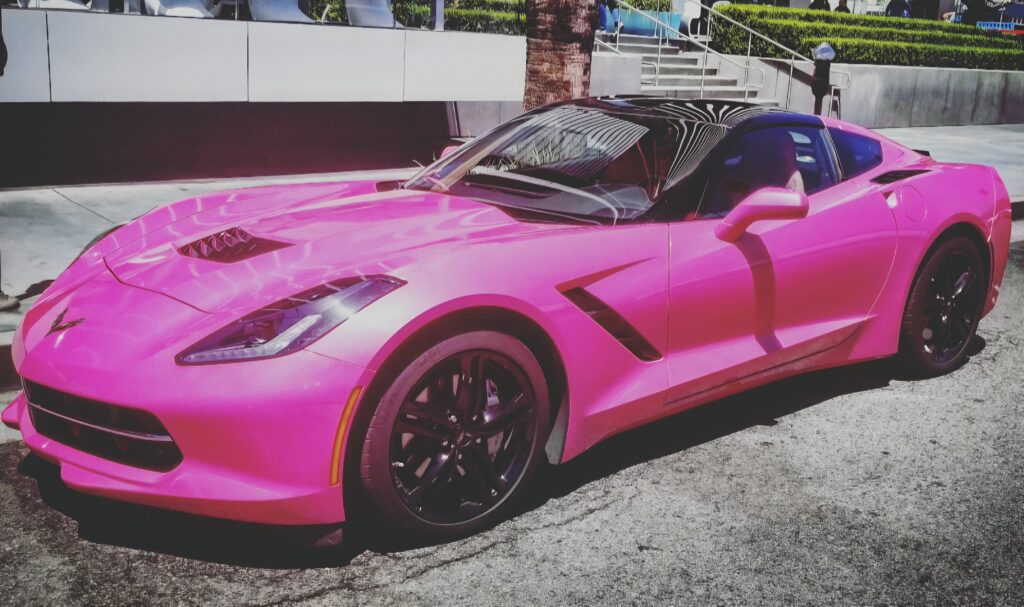
LOS ANGELES — Long before social media made a recognizable image an instant marketing asset, Angelyne turned the streets of Los Angeles into a rolling extension of her billboard persona. Her unmistakable pink Chevrolet Corvettes became part of Hollywood’s visual landscape. Behind that instantly recognizable finish is a very specific Southern California story: a Chevrolet sports car, a North Hollywood body shop, an automotive color specialist, and the technical crafts that bring vehicles onto film and television screens.
For Socialbilitty’s Trade Desk, the story is not about celebrity gossip. It is about the businesses and skilled workers whose contributions make automotive images memorable — on the street and in production.
The Chevrolet behind the Hollywood image
The foundation is an American sports car: the Chevrolet Corvette. Angelyne’s distinctive paint is not a factory Chevrolet color. In a detailed 2014 account published by Los Angeles Magazine, Angelyne purchased a white 2015 Corvette Stingray from Silver Star Chevrolet in Thousand Oaks, then commissioned a custom finish to turn it into her unmistakable pink signature vehicle.
The Corvette’s styling supplies the silhouette; the customized finish makes it unmistakably hers. It is a compelling example of an automobile becoming part of an entertainer’s visual identity without implying that Chevrolet itself designed, commissioned or sponsored the pink transformation.
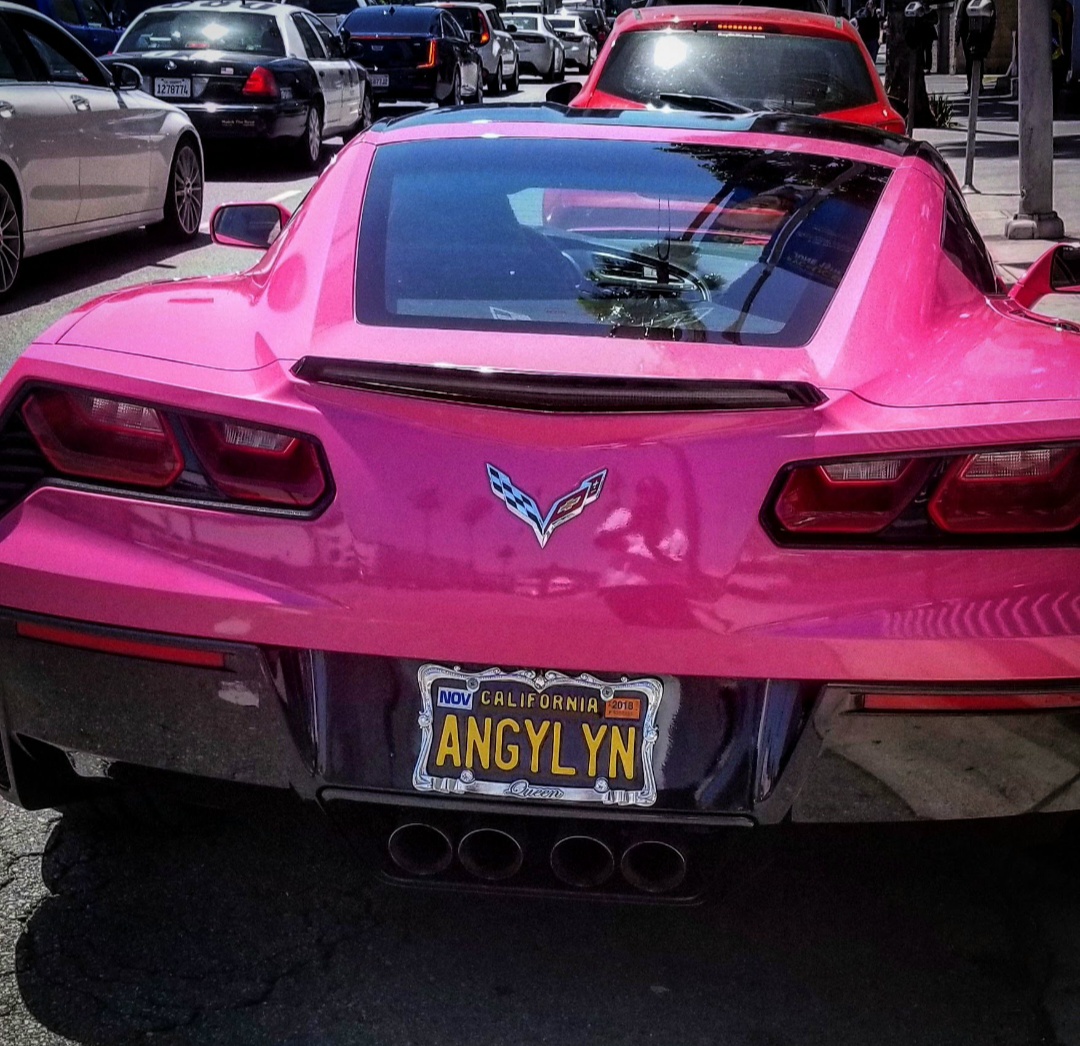
Angelyne-branded Chevrolet Corvette photographed in Los Angeles. Photo: Socialbilitty archive; date not confirmed.
North Hollywood: the craftspeople behind “Heroine Pink”
According to that 2014 report, Andre’s Auto Body and Paint in North Hollywood removed the Stingray’s body panels for refinishing. Meanwhile, master color mixer Ruben Hernandez at State Automotive Supplies in North Hollywood worked with Angelyne on the signature shade called “Heroine Pink.” The paint incorporated an evolving combination of hot pink, metallic effects and sparkle.
The documented 2015 Stingray transformation involved four to five coats of base paint and three to four coats of clear finish on the panels, followed by curing, reassembly and polishing. Those steps are a reminder that a distinctive screen-ready look often depends on painstaking surface preparation, color consistency and finishing work rather than an off-the-shelf paint selection.
Andre’s Auto Body identifies its North Hollywood location at 10537 Victory Boulevard, North Hollywood, CA 91606. Its business site describes a substantial refinishing and repair facility. A September 2026 Hollywood Reporter profile of Angelyne also reported her decades-long relationship with Andre’s, underscoring that this was not a one-time customization.
For clarity: Andre’s and Hernandez are publicly documented for the customization of Angelyne’s personal Corvettes. That does not establish Andre’s as the picture-car vendor or grip-rigging crew on any particular film or television production.
From public streets to film and television picture cars
The Corvette’s connection to Hollywood goes beyond billboards. Angelyne and a pink 2008 Corvette appeared in the 2017 film The Disaster Artist, according to The Hollywood Reporter. In 2022, Peacock’s limited series Angelyne, starring Emmy Rossum, revisited her story and recreated the evolving automotive imagery.
The Television Academy reported that four Corvette models appeared across the series, with production designer Jamie Hall and her team using shifts in pink to express the character’s changing identity. That is picture-car storytelling at work: vehicle selection, appearance and continuity contribute to a production’s visual language.
Chevrolet built the car. Automotive specialists gave Angelyne’s personal cars their distinct finish. On a film set, another collection of departments may become involved in sourcing, preparing, operating and photographing picture vehicles.
The grip department: how a picture car becomes a camera platform
When cameras need to travel with a moving vehicle, IATSE Local 80 motion picture grips are among the trained film craftspeople who may be responsible for vehicle-mounted camera-support systems on covered Los Angeles productions. For the grip department, this is part of the craft: camera support, rigging, problem-solving and safe execution of the shot.
Depending on the shot and production plan, that can involve hostess trays, professional suction-cup mounting systems, speed rail, hard mounts, hood rigs and interior camera-support configurations. The camera department, transportation, stunt personnel, picture-car suppliers and other departments coordinate according to their respective assignments and the safety requirements of the sequence.
This work is not merely attaching a camera to a car. The rig must be suited to the vehicle, protect its bodywork, account for safe attachment and redundancy, and be evaluated for visibility, motion, personnel and road conditions. Los Angeles-based Local 80 Key Grip Brendan Riel has written publicly about those considerations and the challenges of mounting cameras on different vehicles.
The union’s investment in passing down the craft is equally important. On its own training website, IATSE Local 80 identifies instructor Sergio “Ponch” Gutierrez as a professional who teaches dolly, camera-crane and car-rigging skills. The Local also documents dedicated car-mounting and hands-on safety instruction. These are everyday competencies within grip work — and crucial parts of the workforce that supports Los Angeles film, television and commercial production.
Important distinction: Socialbilitty has not independently identified the grips who rigged cameras for The Disaster Artist or Peacock’s Angelyne. This recognition concerns Local 80’s documented picture-car camera-rigging craft generally, not an unsupported credit for either production.
A Los Angeles collaboration of design, finishing and production skills
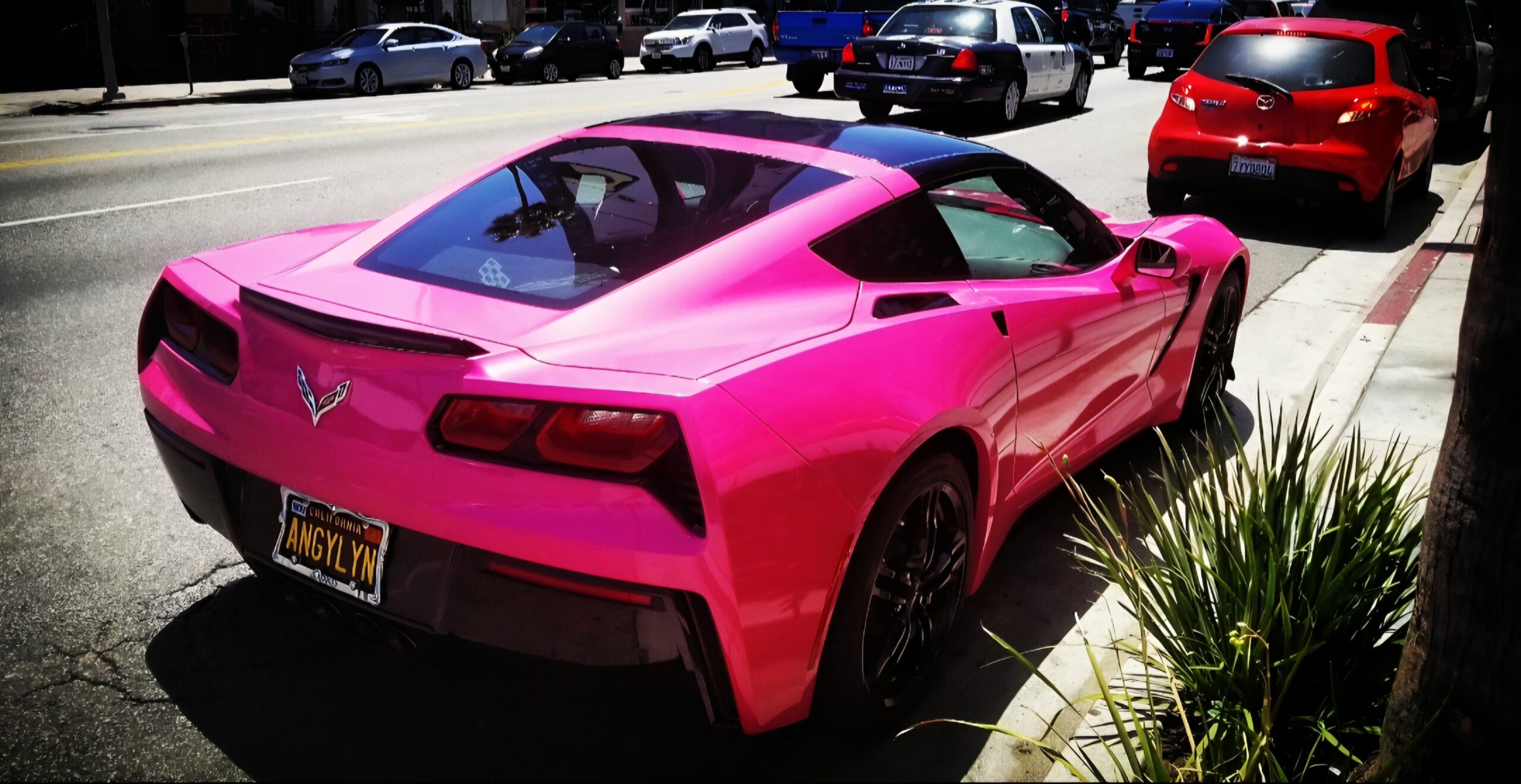
Custom pink Corvette, photographed from a rear three-quarter angle. Photo: Socialbilitty archive; date not confirmed.
The larger story behind Angelyne’s pink Corvette connects several industries that routinely overlap in Los Angeles: automotive manufacturing, vehicle customization, paint mixing, visual branding, production design and the grip craft. Each contributes differently.
For Chevrolet, it is a reminder of how the Corvette can become an enduring pop-culture image. For Andre’s Auto Body and paint specialist Ruben Hernandez, it is a documented showcase of North Hollywood craftsmanship. For Los Angeles motion picture grips, it is an opportunity to recognize the camera-rigging techniques that make vehicles usable as part of a shot when productions require them.
That is the Trade Desk story: the recognizable car may attract the audience’s eye, but the people behind the finish, the production design and the camera support deserve to be visible, too.
Sources and further reading
- Los Angeles Magazine — Behind Angelyne’s 2015 Pink Corvette (November 26, 2014)
- The Hollywood Reporter — Angelyne’s Corvette and Brand (September 11, 2026)
- Andre’s Auto Body & Paint — Official Site
- Television Academy — Angelyne’s Pretty in Pink (May 18, 2022)
- IATSE Local 80 — About the Local
- IATSE Local 80 — Instructor Sergio “Ponch” Gutierrez
- Filmmakers Academy — Local 80 Key Grip Brendan Riel on Car Camera Rigging
Editorial note: This independent feature is not sponsored by Chevrolet, Angelyne, Andre’s Auto Body, IATSE Local 80 or the productions discussed. Photo dates and locations should be identified in captions once confirmed.
CONTINUE FROM HERE