
November 4, 2026
California Elects Xavier Becerra: What Hollywood’s Next Governor Means for Los Angeles Production Jobs
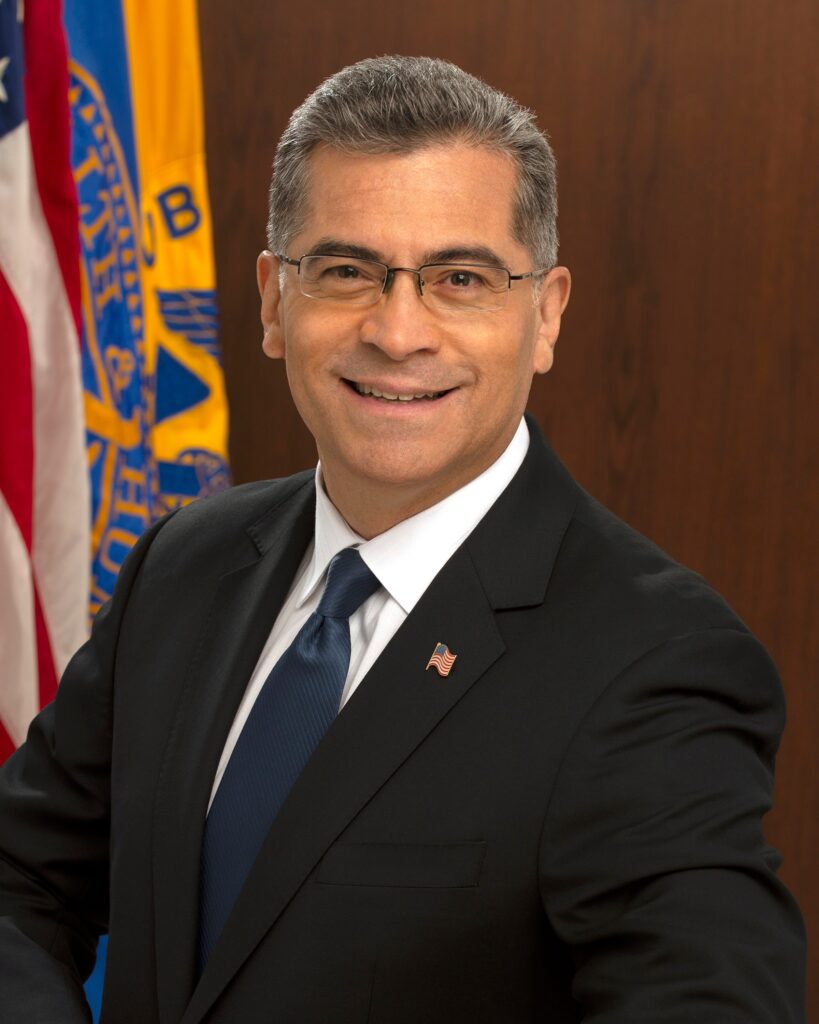
Featured photo: Xavier Becerra, official U.S. Department of Health and Human Services portrait (2021). Archival photograph, public domain. Not an election-night image.
SOCIALBILITTY TRADE DESK | CALIFORNIA FILM & TELEVISION
November 4, 2026 | Los Angeles, California
California’s incoming governor inherits an entertainment industry still struggling with runaway production, declining location filming and a workforce waiting for a sustained recovery. His proposed policies could shape the next chapter of Hollywood’s production economy.
A New Governor, An Industry at a Crossroads
LOS ANGELES — Democrat Xavier Becerra has won California’s November 3, 2026, gubernatorial election, defeating Republican Steve Hilton and setting the stage for a new administration that will inherit one of the state’s most significant economic challenges: rebuilding the entertainment production economy.
Becerra, a former California attorney general, congressman and U.S. Secretary of Health and Human Services, will succeed Governor Gavin Newsom when his term begins January 4, 2027.
For Hollywood, the transition arrives at a critical moment.
California has expanded its Film and Television Tax Credit Program, studios continue evaluating production costs, and thousands of entertainment workers remain concerned about the availability of sustained employment.
Becerra enters office with a published film-industry policy platform addressing production incentives, labor protections, workforce development, artificial intelligence and filming permits.
The question facing the incoming administration is whether those commitments can translate into more productions employing California workers.
Newsom’s $1 Billion Proposal Changes the Conversation
Just one day before the gubernatorial election, Governor Newsom announced a proposal to increase California’s annual film and television tax credit from $750 million to at least $1 billion.
The November 2 announcement outlined several changes, including:
- Increasing independent-film incentives to $100 million annually.
- Expanding qualifying expenditures to include certain above-the-line compensation.
- Providing an additional 5% incentive for eligible companies committing to at least two qualifying California productions.
- Extending the program through 2040.
- Continuing efforts to establish a complementary federal film and television tax credit.
The announcement follows California’s 2025 expansion of the program from $330 million to $750 million annually.
However, Newsom’s newest proposal is not yet law. Legislative approval and funding decisions remain necessary.
Becerra has pledged to defend and expand the existing incentive program, particularly where California is losing work in episodic television, independent productions, post-production and visual effects.
He has not publicly committed to adopting every provision of Newsom’s proposed $1 billion package.
That distinction matters to production companies evaluating long-term commitments and to workers hoping that additional state spending will translate into dependable employment.
The Production Numbers Tell a More Complicated Story
According to FilmLA’s October 21, 2026, production report, Greater Los Angeles recorded 4,171 permitted on-location shoot days during the third quarter of 2026.
That represents a 4.8% decline from the corresponding period in 2025.
The same report identified encouraging movement among productions supported by California’s incentive program.
Tax-credit-assisted projects accounted for 40.3% of scripted on-location filming during the quarter, nearly double their share one year earlier.
Television comedy production recorded 192 shoot days, compared with 79 during the third quarter of 2025. Incentivized television drama production also increased significantly.
Feature-film activity reached 533 shoot days, a 2.1% year-over-year increase.
Yet the overall regional decline demonstrates that gains in selected categories have not fully restored Los Angeles production activity.
FilmLA’s figures also exclude filming on certified soundstages and locations outside its reporting jurisdictions. They should not be mistaken for a complete measurement of all production occurring within the Los Angeles Thirty-Mile Studio Zone.
Below-the-Line Workers Must Be Part of the Recovery
Hollywood’s economic recovery cannot be measured solely by the number of projects receiving tax credits.
Every production depends on a network of skilled craftspeople and businesses, including grips, riggers, electricians, camera crews, art departments, construction crews, transportation workers, caterers, equipment suppliers and post-production specialists.
For IATSE members and other union-represented crafts, the practical measure of recovery is the availability of paid work under applicable collective bargaining agreements.
A project may receive an incentive allocation months before cameras begin rolling.
An announced production is not necessarily a staffed production.
Becerra’s campaign platform explicitly recognizes the importance of entertainment workers and proposes creating a California Entertainment Summit involving guilds, crew organizations, producers, studios, streaming companies and technology businesses.
The proposed summit would develop a public action plan with identified responsibilities and milestones.
Whether below-the-line workers receive meaningful representation in those discussions will be an important test of the administration’s labor commitments.
Commercial Production Cannot Be Left Out
One area requiring separate attention is commercial production.
FilmLA reported 562 commercial shoot days during the third quarter of 2026, a decline of 15.9% from the same quarter in 2025.
Commercials are not eligible for California’s existing Film and Television Tax Credit Program.
Consequently, increasing that program’s funding will not directly provide commercial producers with the same financial incentives available to qualifying film and television projects.
This distinction is particularly relevant throughout Los Angeles, where commercial shoots employ many of the same craftspeople, rental companies, stages and location-service providers that support motion-picture and television production.
Becerra’s proposed permitting reforms could benefit commercial production, but his administration has not yet established a dedicated commercial production incentive.
For Los Angeles crews, commercials remain part of the broader employment equation.
Film Permits, Locations and the Thirty-Mile Studio Zone
Another important component of Becerra’s platform concerns the cost and complexity of film permitting.
The governor-elect has proposed working with state and local governments to simplify permitting processes and reduce administrative barriers that can discourage production.
For the Los Angeles Thirty-Mile Studio Zone, traditionally measured from the intersection of Beverly Boulevard and La Cienega Boulevard, improved coordination could potentially benefit location managers, production offices, property owners and service providers.
However, the Thirty-Mile Zone is a labor-related geographic designation, not a single permitting jurisdiction.
Different municipalities, public agencies and property owners retain their respective responsibilities.
Any meaningful statewide permitting initiative would therefore require cooperation among multiple government entities.
For production companies, improvements in approval times, administrative costs and logistical coordination could become important factors when comparing Los Angeles with competing production destinations.
Artificial Intelligence and the Future Workforce
Becerra’s entertainment platform also addresses artificial intelligence and changing production technologies.
His proposals include greater disclosure of AI use, protections for performers’ digital likenesses and expanded workforce training.
He also supports greater transparency concerning streaming performance data, which can affect compensation negotiations and the economic interests of creative workers.
These proposals arrive while AI tools are increasingly being integrated into development, visual effects, post-production and other production workflows.
The impact will vary across departments.
For workers, training alone will not resolve questions about job displacement, employment standards, bargaining rights or compensation.
How the new administration coordinates technology policy with established labor agreements will deserve continued scrutiny.
What Happens Next?
Becerra’s election does not immediately change California’s film incentive rules or provide new funding to productions.
The existing program remains in place while Newsom completes his term.
The incoming administration will face several decisions beginning in January 2027, including whether to advance Newsom’s proposed expansion, how to structure its Entertainment Summit and which permitting and workforce initiatives to prioritize.
The California Legislature will also play a central role in approving funding and any necessary statutory changes.
For studios and production companies, predictability remains essential.
For workers, the priority is more direct: sustained production employment.
California’s entertainment economy depends not only on major studios but also on the thousands of workers, vendors and local businesses whose livelihoods depend on work being produced here.
The Socialbilitty Perspective
California has spent years debating how to remain competitive in an increasingly international production marketplace.
The next administration will inherit both an expanded incentive program and a regional industry still confronting significant employment and production challenges.
Becerra’s proposals provide an outline of the direction he intends to pursue. Their effectiveness will depend on implementation, funding, industry participation and measurable results.
For the Los Angeles production community, the most meaningful indicators will include productions entering principal photography, local crew hiring, commercial activity, soundstage utilization and spending with California businesses.
The next chapter of Hollywood’s economic recovery will be determined not simply by how much money California allocates, but by how much production work actually returns.
The question for California’s next governor is whether the state’s investment in Hollywood will produce sustained employment for the people who keep the industry running.
Socialbilitty Trade Desk covers verified developments affecting film, television and commercial production in and around Los Angeles, California, with particular attention to the Thirty-Mile Studio Zone, production employment, locations, industry infrastructure and workforce access.
Sources & Related Coverage
- POLITICO — California governor election report (November 3, 2026)
- Xavier Becerra — Film Industry Policy Agenda
- California Governor’s Office — Film and Television Tax Credit Proposal (November 2, 2026)
- FilmLA — Q3 2026 Location Filming Report (October 21, 2026)
- Related Trade Desk: California Film Tax Credit, DEIA, Union Hiring & Workforce Access
CONTINUE FROM HERE