
October 29, 2026
CONFIRMED: LA Council Advances Free Micro-Shoot Permits and $1 City-Property Filming Plan
CONFIRMED — Los Angeles, October 29, 2026. The Los Angeles City Council voted on October 27 to advance two measures intended to make local filming less expensive: a no-fee permit for qualifying micro-shoots and a separate initiative involving nominal charges for certain city-owned filming and parking locations. The policy targets some of the smallest productions, but it is not a blanket exemption from permits, insurance, safety rules, or agency coordination.
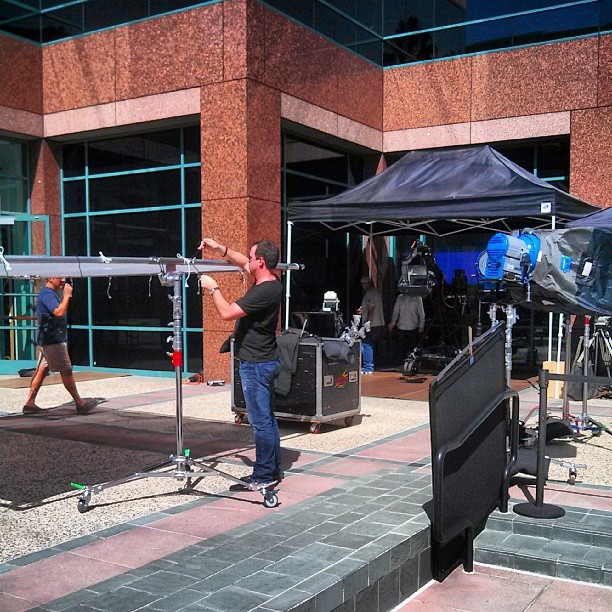
Photo: Socialbilitty archival photograph of a grip crew preparing diffusion during an earlier E! News production. Illustrative image only; not a photograph of the October 27, 2026 City Council proceedings.
What changed
The micro-shoot ordinance concerns small, low-impact productions with up to 10 people on site. According to the council’s legislative record and contemporary reporting, the qualifying concept is deliberately narrow: handheld or lightweight equipment, limited sidewalk interference, and no complex activities such as traffic control, generators, drones, or special effects. The city has also requested an implementation report with input from public-safety and permitting departments.
A separate City Council item concerns non-specialized city-owned parking lots, staging areas and other public properties. It seeks access at $1 per day or another legally required nominal fee, subject to operational and safety constraints. Departments must work through implementation details; producers should not assume every city property is currently available for $1.
Why crews and small productions should pay attention
A waived permit fee can make a difference to student films, documentaries, micro-budget narratives and short-form shoots. But eliminating one administrative fee does not eliminate labor costs, equipment rentals, parking arrangements, location restrictions, or obligations to protect the public. Small productions still need a sound plan for camera support, cable runs, pedestrian access, fire safety, and any required permits.
For below-the-line workers, this is a potential production-access signal, not evidence of confirmed new employment. Whether it yields paid grip, electric, camera or location work will depend on how many additional projects actually film—and whether those productions have budgets to hire crews.
Why the timing matters
FilmLA reported 4,171 on-location shoot days in Greater Los Angeles for the third quarter of 2026, a 4.8 percent decline from the year-earlier period. Incentive-supported projects accounted for a larger share of scripted shooting, but the broader region remained below recent historical norms. The Council’s new action focuses on one part of that problem: reducing barriers for smaller productions that may not qualify for the state tax-credit program.
What remains to be verified
Before budgeting a shoot around the new rules, producers should confirm the effective date, qualifying definitions, any insurance provisions, actual property availability, and the applicable FilmLA or city application process. Council action and practical rollout are different milestones.
Editorial assessment: Confirmed council action; implementation details developing. No specific crew openings are represented or implied.
Primary records and supporting reporting
- Los Angeles City Clerk: Council File 25-1498 — Free Micro-Shoot Permit
- Los Angeles City Clerk: Council File 25-1508 — City Facilities and Parking
- FilmLA: Q3 2026 production research, released October 21, 2026
- NBC Los Angeles: October 27 council action
Socialbilitty Trade Desk — Where Entertainment Information Lives.
CONTINUE FROM HERE